Reduced Order Modelling and Scientific Machine Learning (SciML)
Model order reduction provides a low-dimensional representation of high-fidelity simulations while preserving essential flow and structural dynamics. Depending on the chosen approximation and projection strategy, several ROM frameworks exist—including intrusive, non-intrusive, and hybrid data-driven approaches. Recent developments in physics-informed neural networks (PINNs) enable coupling governing equations with sparse datasets in a non-intrusive setting.
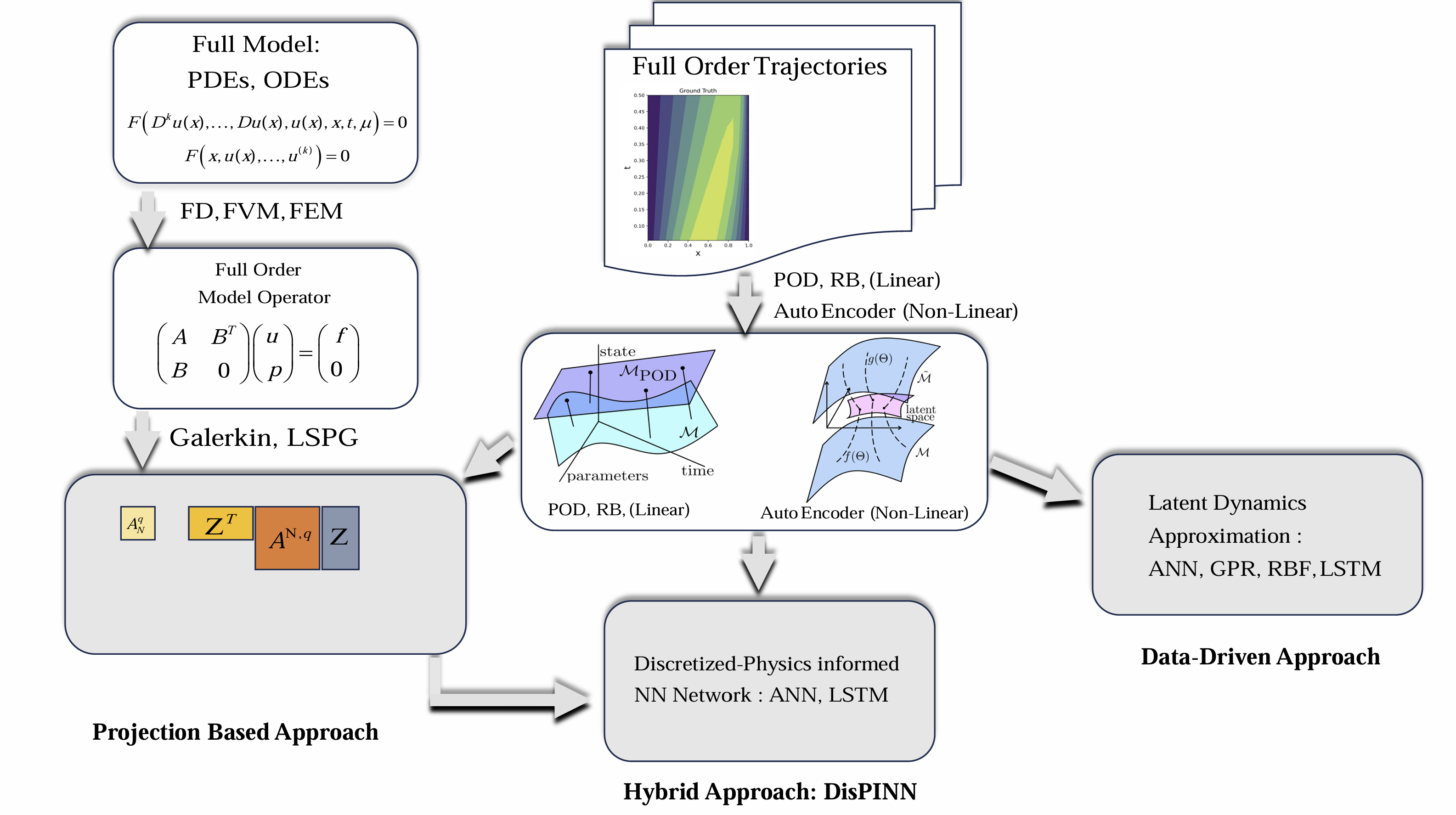
My ongoing work involves three aspects: (1) PINNs that embed discretized full-order and reduced-order equations as loss terms (ANN-DisPINN, LSTM-DisPINN); (2) POD-Galerkin ROM for Biological Flow. (3) Data-driven ROMs for industrial configurations.
Cerebrovascular Flow: POD–Galerkin & Physics-Informed Temporal Models
Extending ROM and SciML to physiological systems, we model unsteady cerebrovascular hemodynamics using reduced-order frameworks enhanced by neural architectures. POD–Galerkin projection and Physics-Informed Reservoir Computing (PIRC) enable accurate temporal reconstruction of pressure and velocity fields under sparse data constraints.
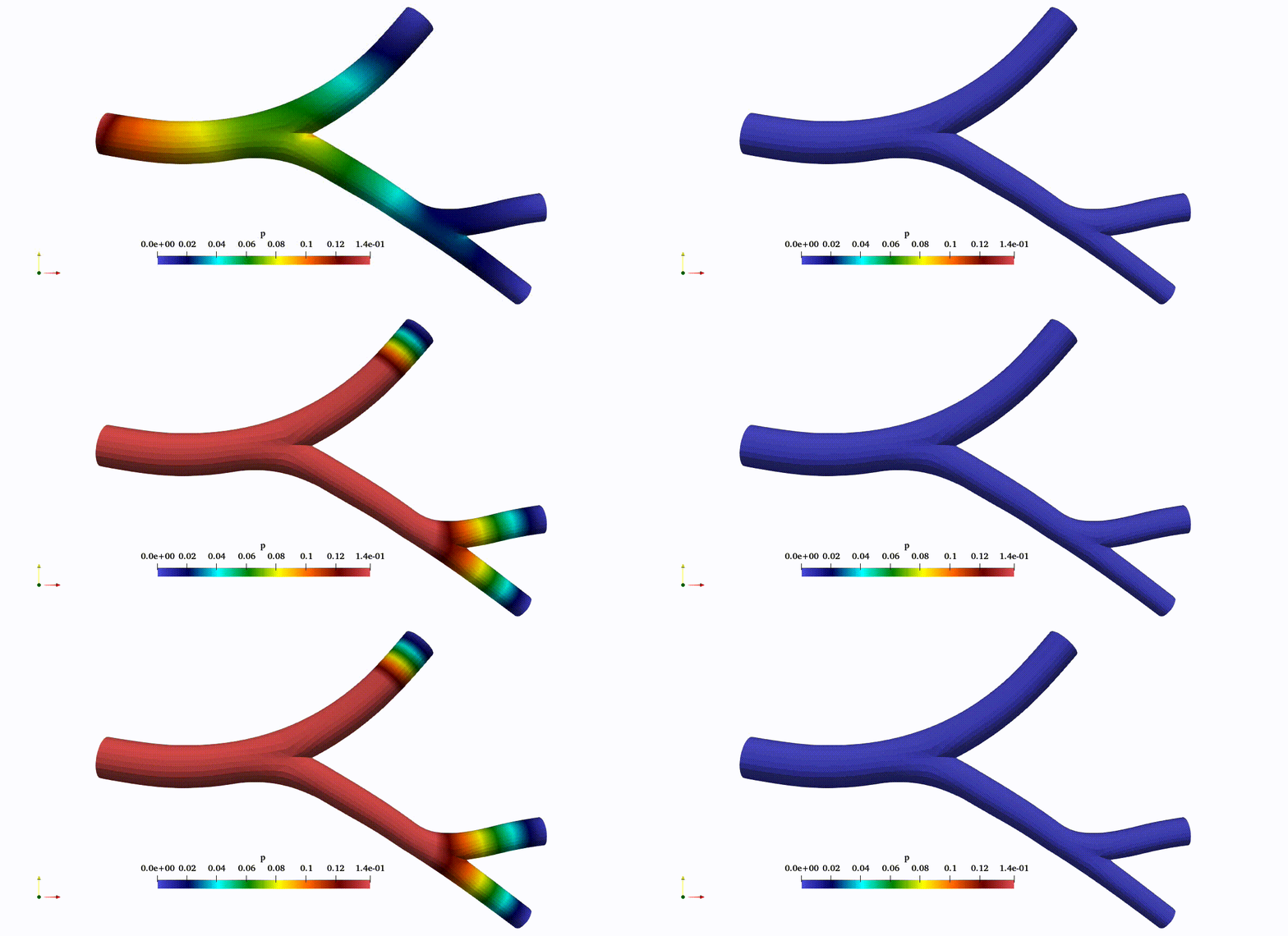
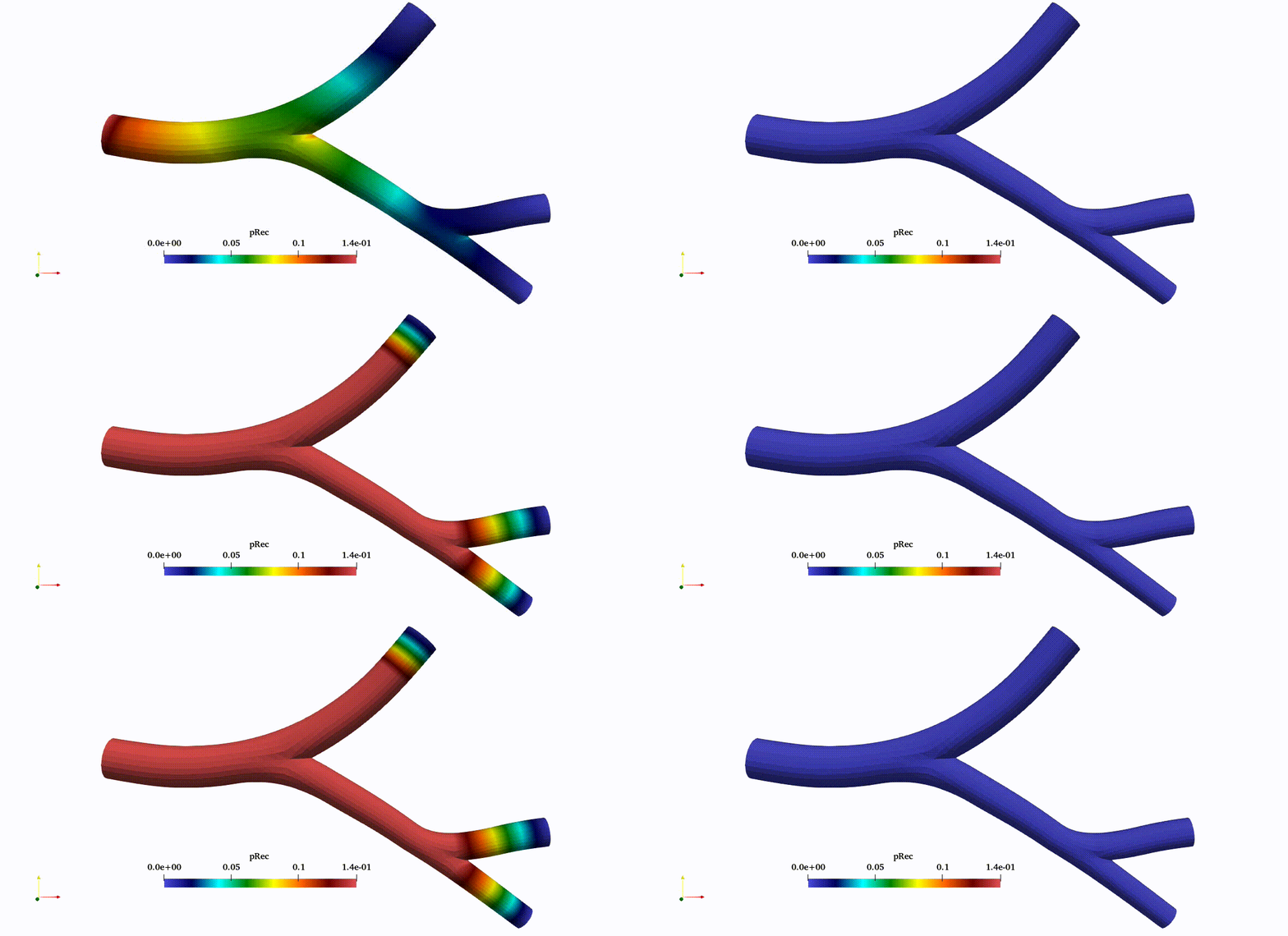
These hybrid physics–AI methods enable real-time predictions of arterial flows without solving full-scale Navier–Stokes equations and form the core of next-generation ROMs for biomedical applications.
Particle-Laden Flow Systems and POD–LSTM Reduced Order Modelling
Multiphase, particle-laden flows arise in fluidized beds, sprays, and pollutant transport. Strong coupling between dispersed and carrier phases introduces nonlinearity and multiscale dynamics, making full-order simulations expensive. We combine Proper Orthogonal Decomposition (POD) for spatial compression with Long Short-Term Memory (LSTM) networks for nonlinear temporal prediction.
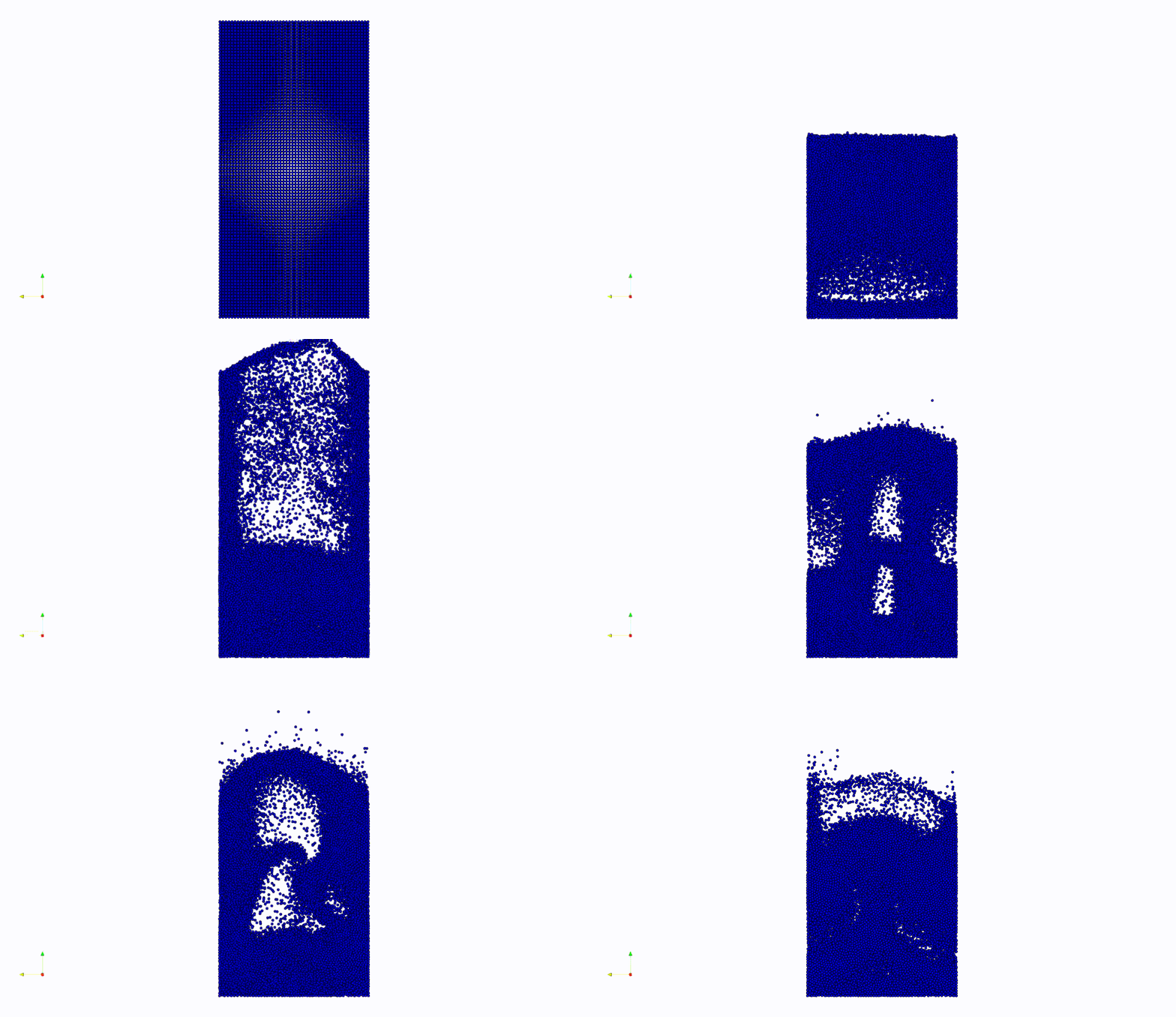
POD extracts dominant coherent structures to yield a compact latent state for both fluid and particle quantities. An LSTM then learns long-horizon temporal dynamics in this reduced space, forecasting fields (velocity, vorticity, particle distribution) without re-solving the PDEs—yielding a non-intrusive, physics-aware surrogate with strong interpretability via modal energy content.
Reference: Hajisharifi A., Halder R., Girfoglio M., Beccari A., Bonanni D., Rozza G. A LSTM-enhanced surrogate model to simulate the dynamics of particle-laden fluid systems. Computers & Fluids, 280:106361 (2024). DOI
Coupling OpenFOAM with Physics-Informed Neural Networks (PINNs)
We hybridize high-fidelity CFD solvers such as OpenFOAM with PINNs to merge the robustness of numerical solvers and the generalization of deep learning. Sparse flow-field data from OpenFOAM train a PINN under Navier–Stokes residual and boundary constraints, enabling inference in unobserved regions and fast parameter sweeps.

This non-intrusive data assimilation approach provides a flexible bridge between CFD and SciML, supporting reduced-order digital twins and real-time flow reconstruction.
Reference: Halder R., Stabile G., Rozza G. Coupling Physics-Informed Neural Networks with External Solvers. (2025). arXiv:2509.24615
Linear and Non-Linear Non-Intrusive ROM for Aeroelastic & Wave–Structure Interaction
During my Ph.D. at the National University of Singapore (with Prof. Khoo Boo Cheong), I developed linear and nonlinear non-intrusive ROMs for aeroelastic systems and gust load analysis. The open-source CFD platform SU2 was extended for coupled fluid–structure simulations and modal ROM computations.
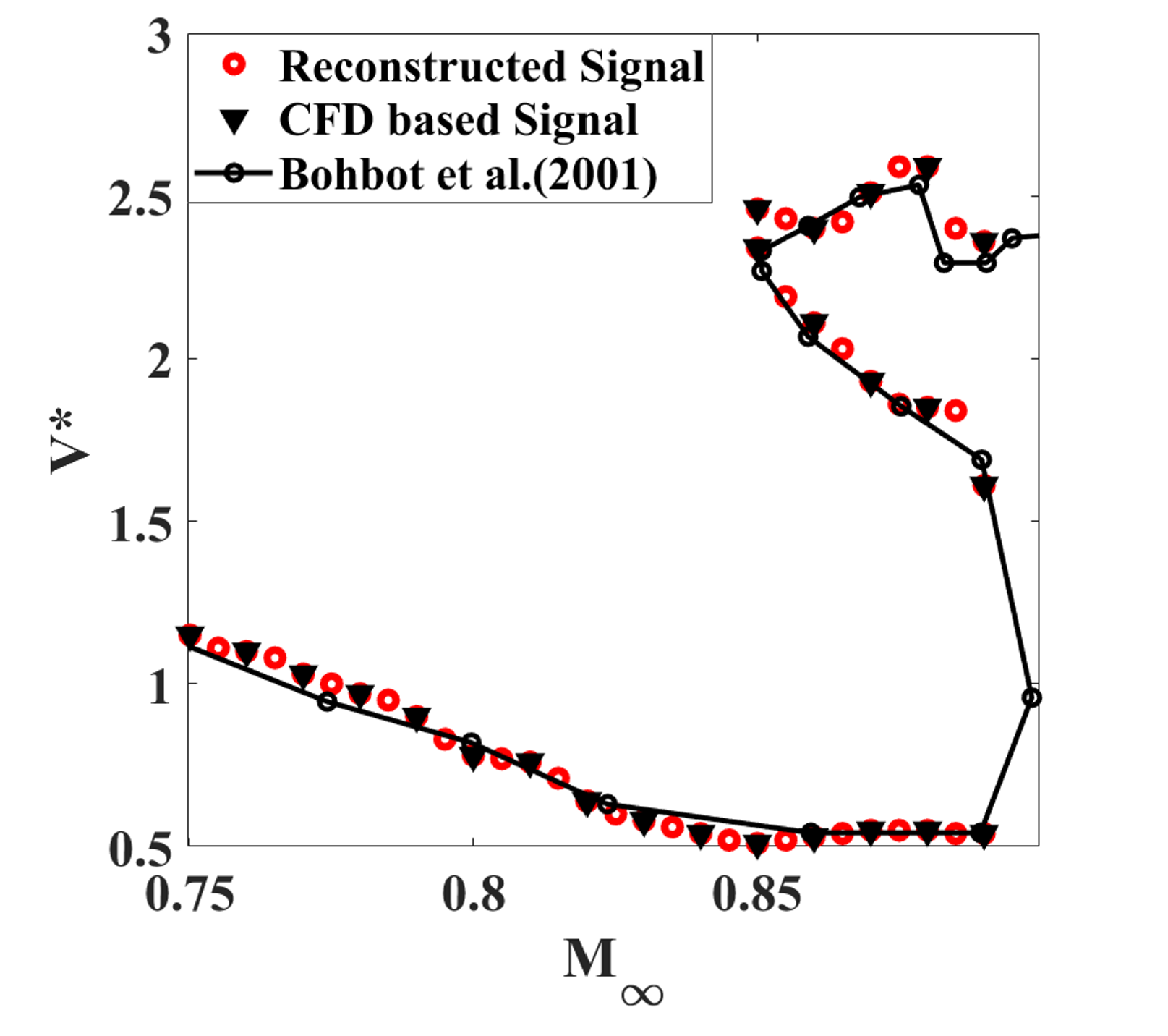
Linear Non-Intrusive ROM — Subspace identification coupled with DEIM for reconstructing distributed variables. Applied to airfoil flutter under gust excitation; inviscid flutter boundary for NACA64A010 shown alongside.
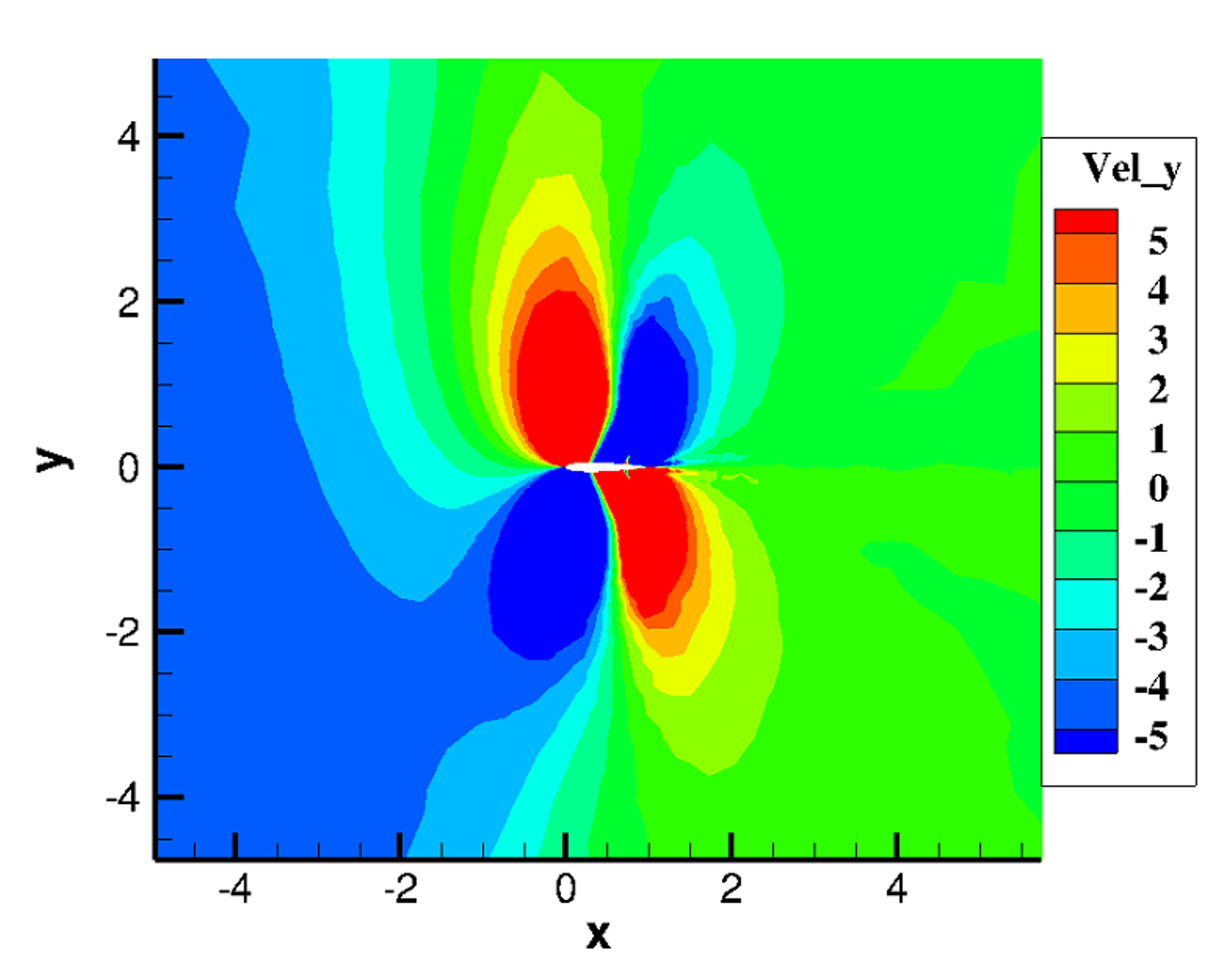
Nonlinear Non-Intrusive ROM — LSTM-enhanced ROM (coupled with DEIM) for viscous transonic aeroelastic phenomena. The figure shows the nonlinear interaction between the gust and shoock boundary layer interaction,
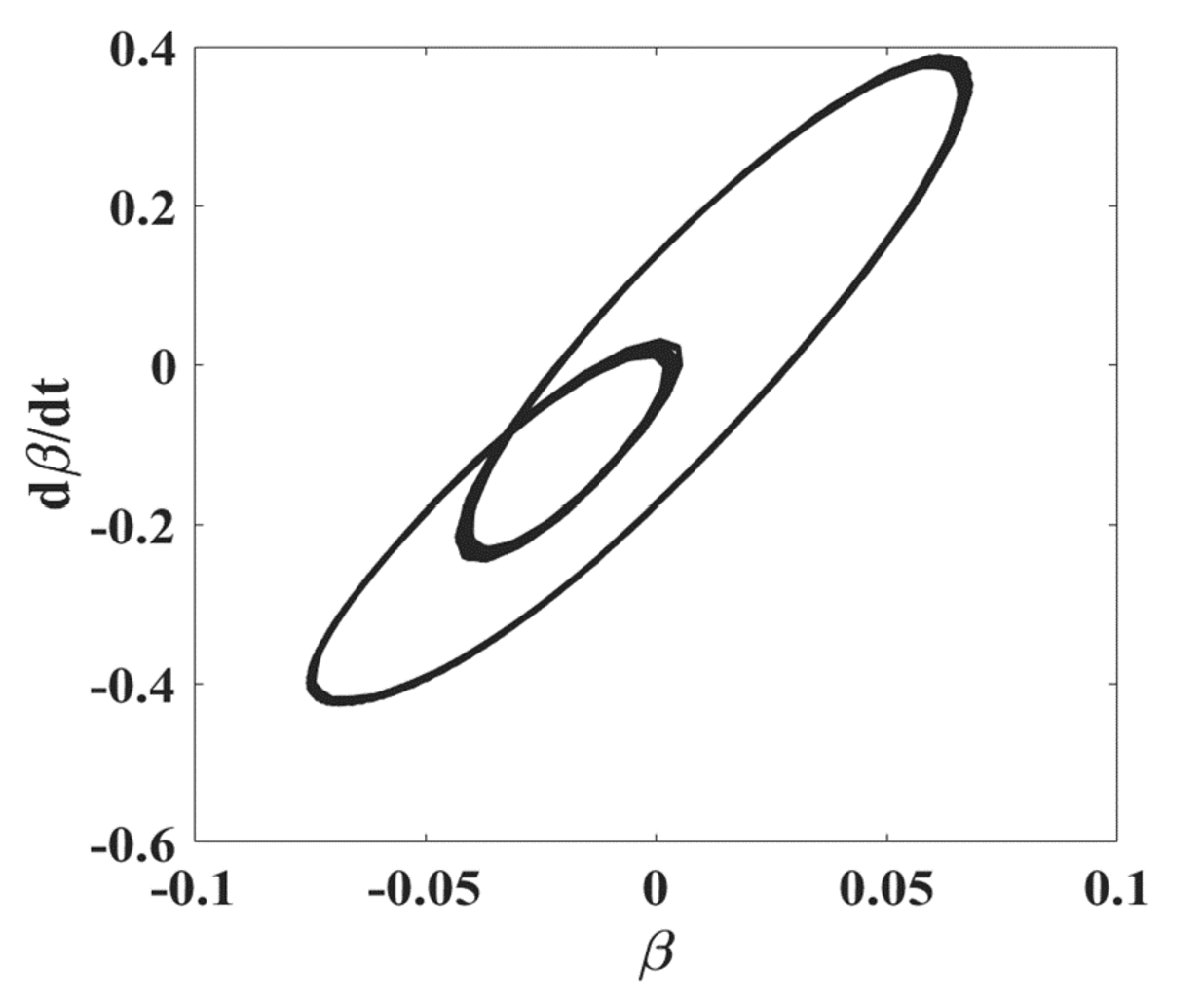
Periodic Gust Effect on Aeroelastic Motion — Assessing responses to periodic vertical gusts impacting a pitching–plunging airfoil with a trailing-edge control surfaces in transonic regimes. The figure shows that the periodic gust interaction with an aileron buzz problem causes a secondary frequency to appear.
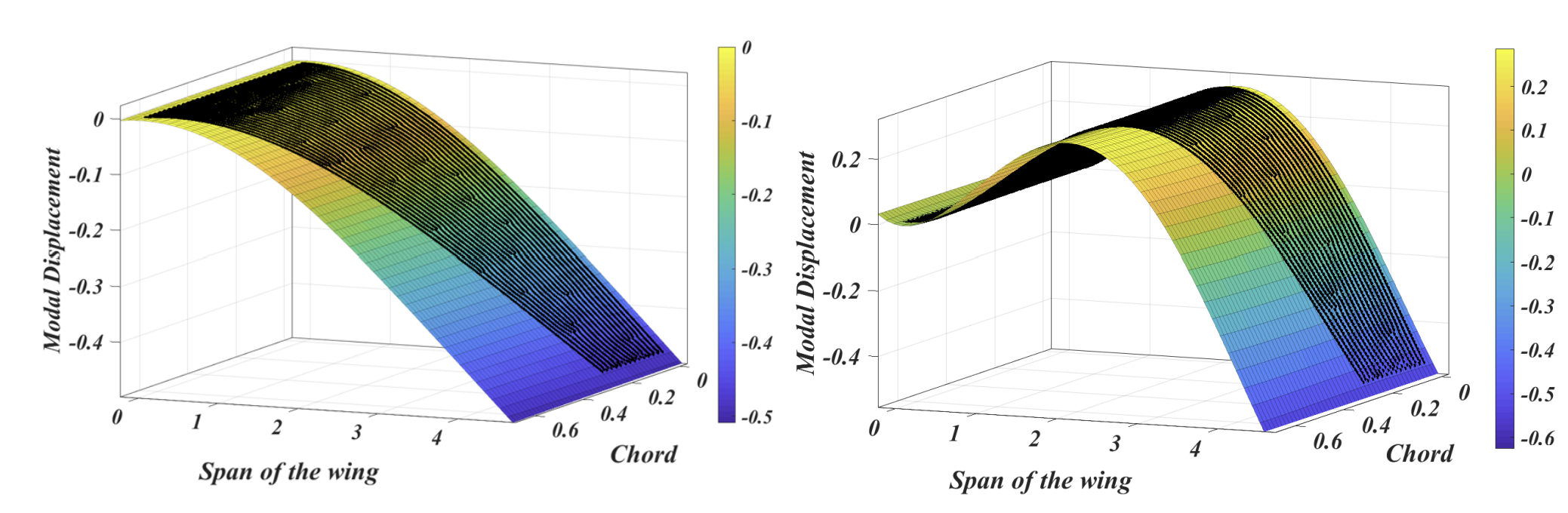
Three-Dimensional Aeroelasticity and ROM in SU2 — Implemented modal analysis for linear aeroelastic ROM computation in SU2, enabling modal deflections and random excitations for 3D wings (beyond rigid-body motion).
Wave–Structure Interaction — LSTM-driven NIROMs for floating-body dynamics under surface waves. SPH simulations provide hydrodynamic forces and displacements to benchmark ROM performance.
Miscellaneous
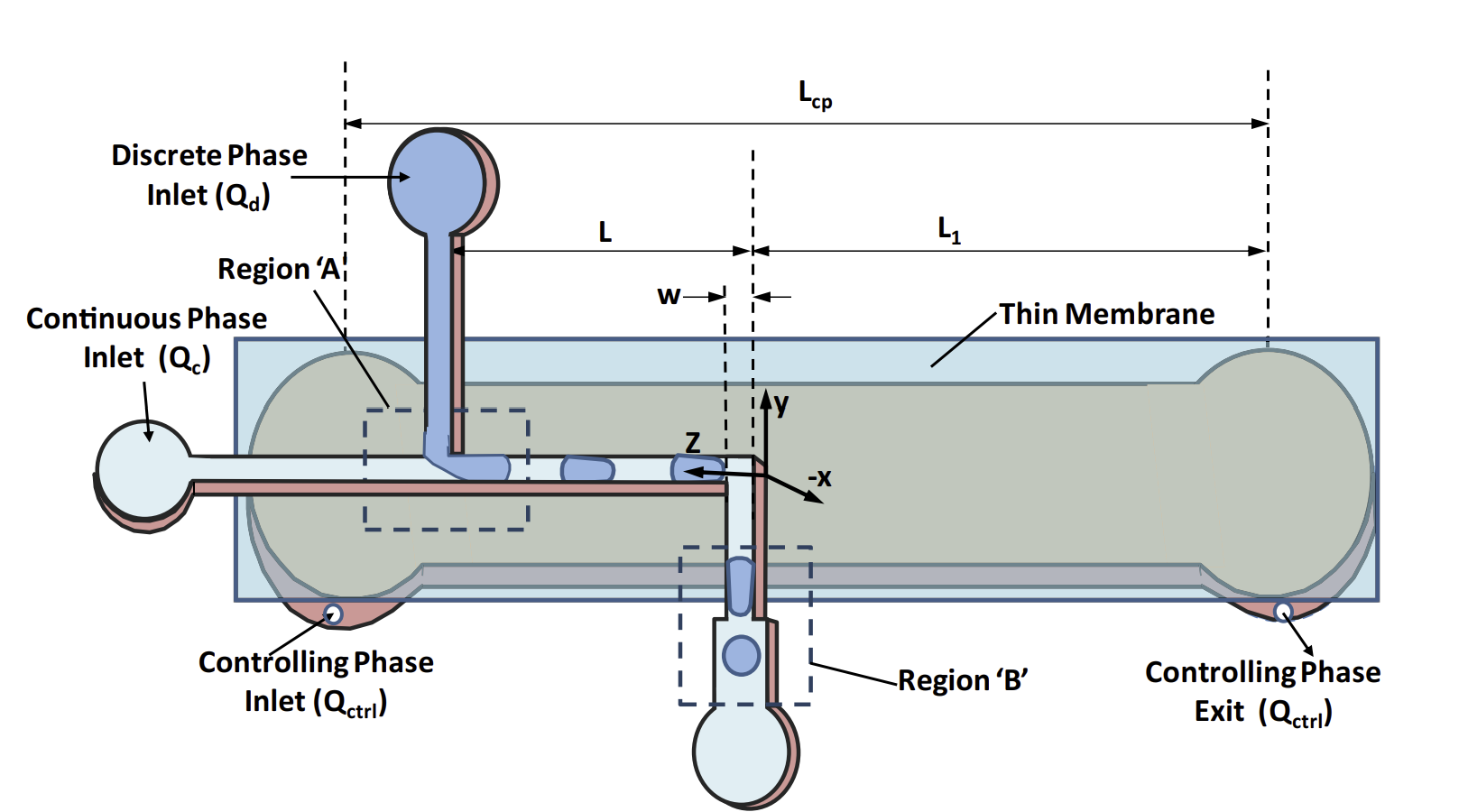
Additional research includes fluid–structure interactions in microfluidic systems for bioengineering applications, notably droplet generation in flexible microchannels mimicking cellular motion through capillary networks.
Droplet Dynamics in Flexible Microchannels — Experimental and analytical studies on pressure-actuated membrane walls for tunable droplet generation and monodisperse control at high capillary numbers.